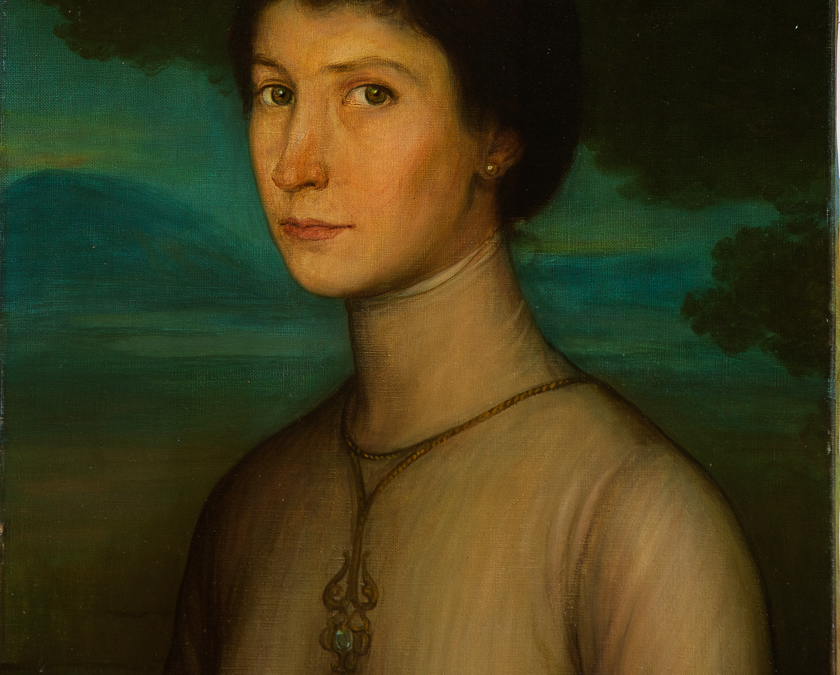
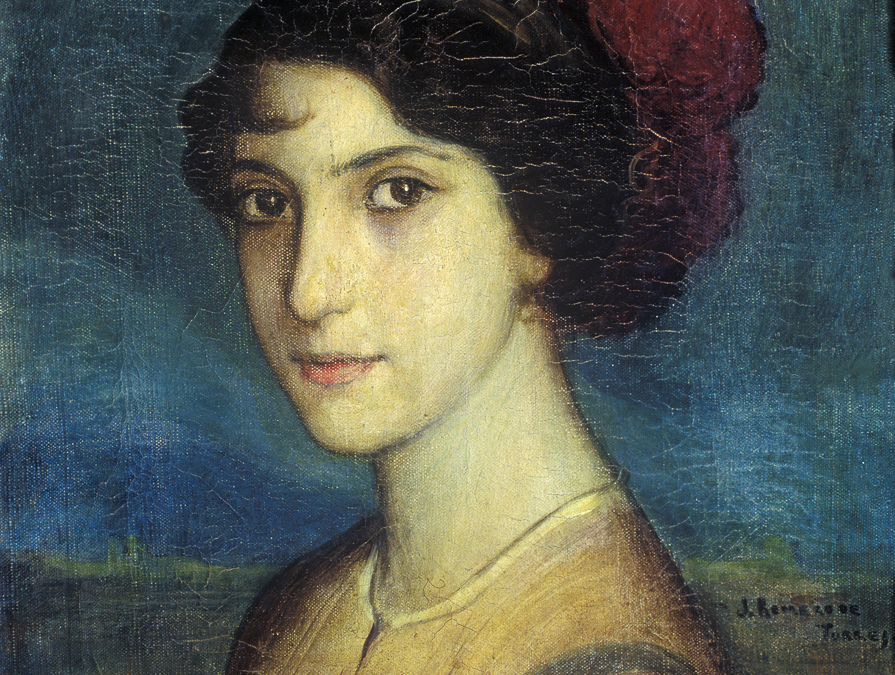
This canvas dated 1910 is a sketch of the portrait of Isolina Gallego de Zubiaurre, from the same date, property of the Museo Nacional Centro de Arte Reina Sofía and deposited in the Julio Romero de Torres Museum in Córdoba. On this occasion the protagonist is Isolina...
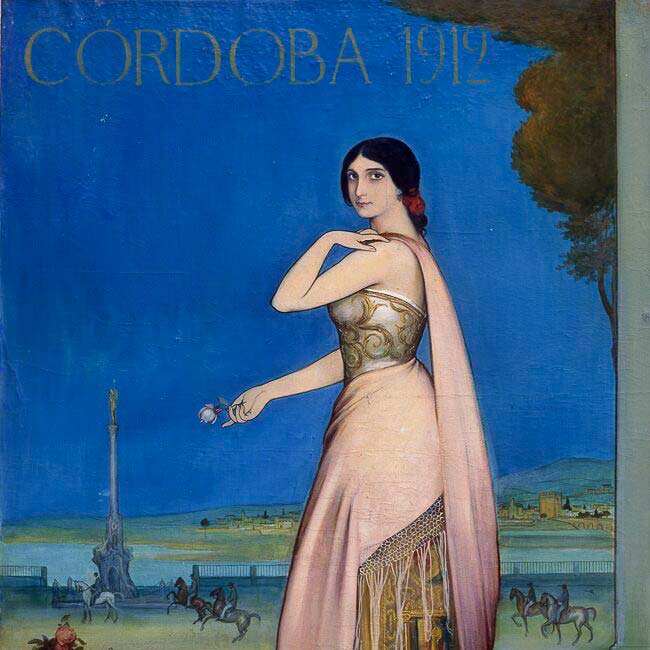
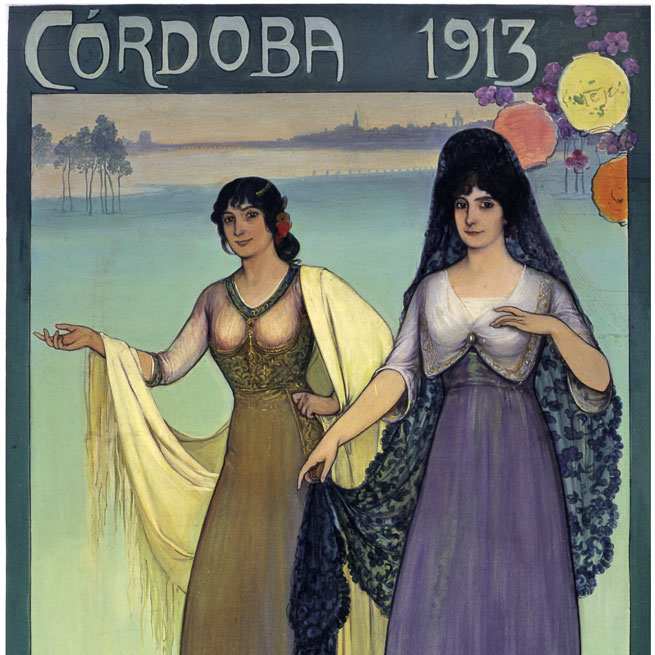
In the work of Julio Romero de Torres we can find a relationship with Catalan and Parisian Modernism at the end of the century, with the posters of Toulouse Lautrec or Ramón Casas that advertised variety events and consumer products. Effluvia that become evident in...
The poster as a advertising strategy was born in France at the end of the 19th Century. The best poster designer was the French painter Henri Toulouse-Lautrec. Thanks to this painter, the poster acquired artistic importance when the Modernism began to spread around...
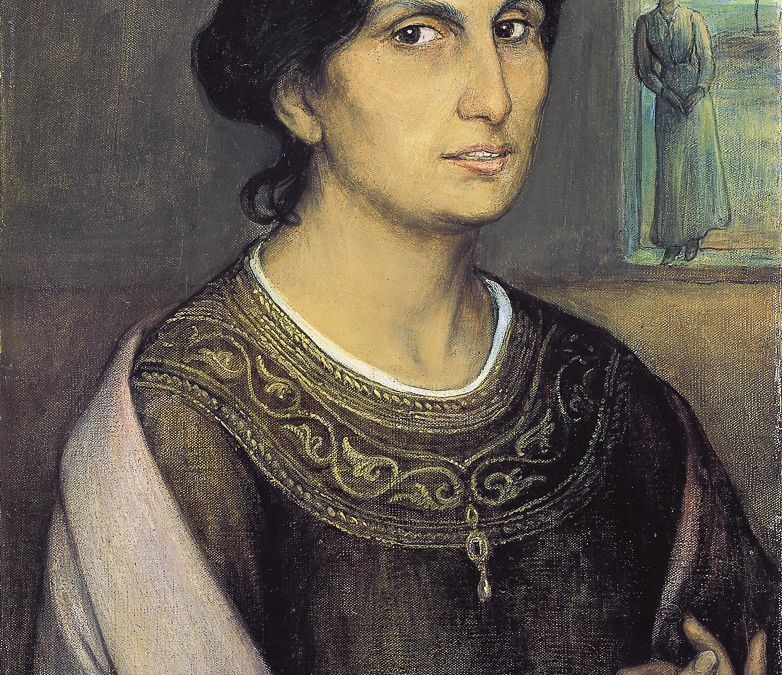
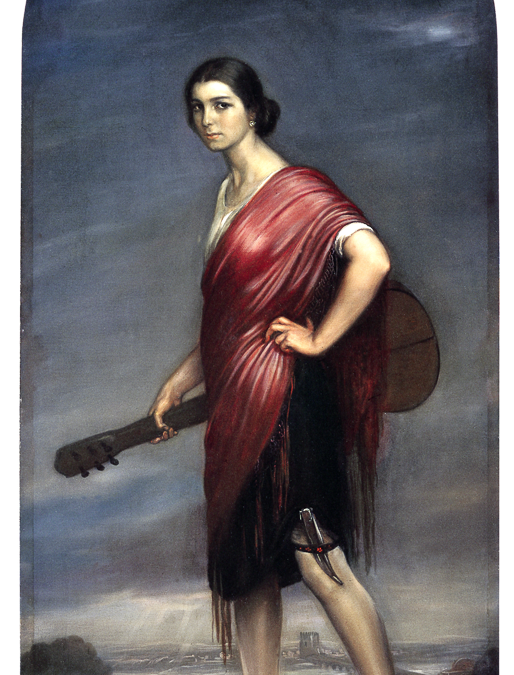
This portrait made in 1911 shows the flamenco singer Carmen Casena. The artist’s use of external and Italian element was often criticized. Nevertheless, this is one of his characteristic features. The figure of this mature woman has a certain sensual appearance...
Around 1915 Romero de Torres painted this magnificent portrait of the dancer and choreographer Encarnación López (La Argentinita, The Little Argentinian). She became a Spanish citizen and founded, along with the poet Federico García Lorca, an Andalusian dance company...
This painting is one of the most famous works of Julio Romero de Torres. It is a genuine homage to the most popular symbols of his Andalusian homeland. The work is made of oil and tempera on canvas, measuring 169 cm by 200 cm. It was painted in 1907, immediately after...
This work was painted in 1917, when the painter was at the high of his talent. Romero de Torres mastered to perfection the painting technique. This is revealed by the use of line and color. This painting is master composition with a female figure in the center taking...
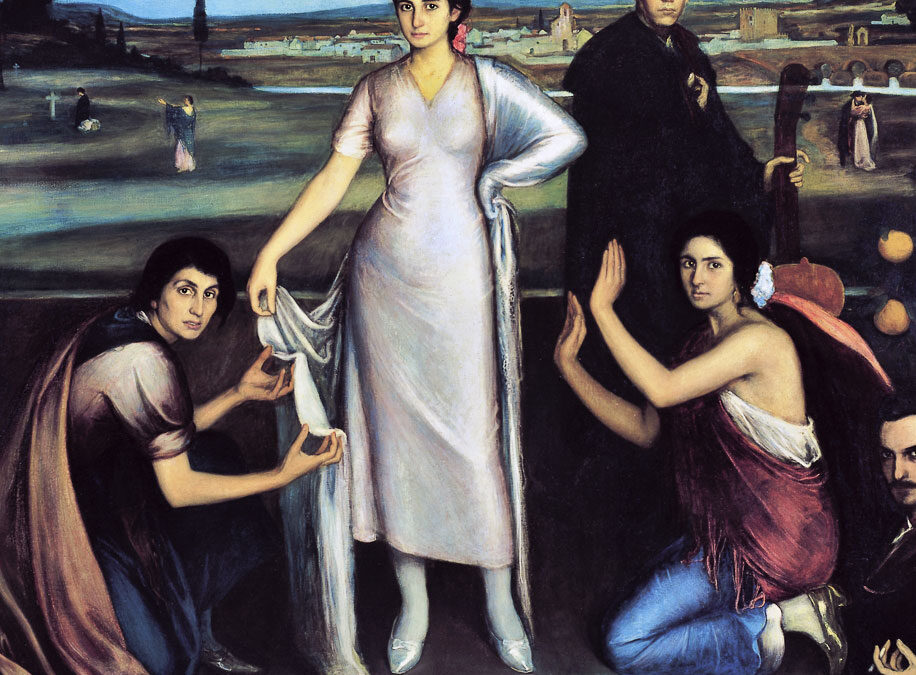
Romero de Torres started to work on the painting in 1922, owing to National Contest of «Cante Hondo» in Granada. The work was finished in 1924. It gathers together all the key concepts of the painter’s artwork, highlighting his mastery of the Symbolism. This balanced...
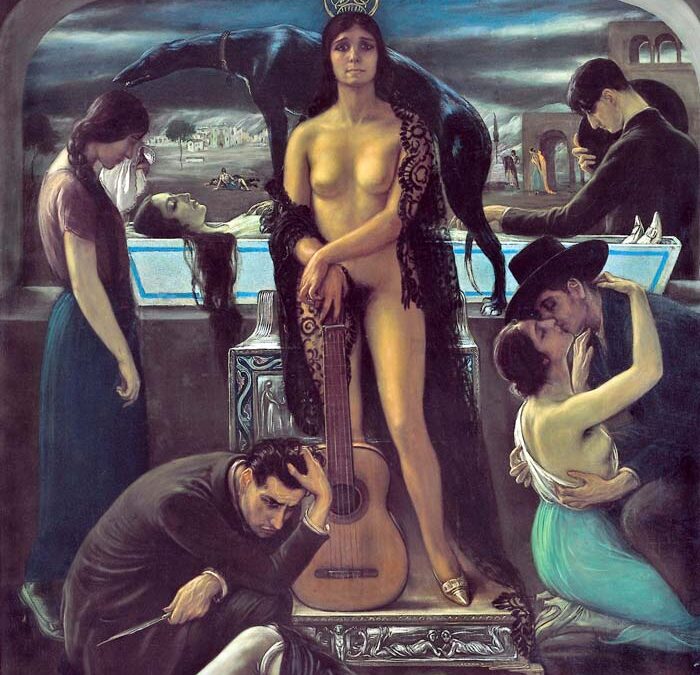
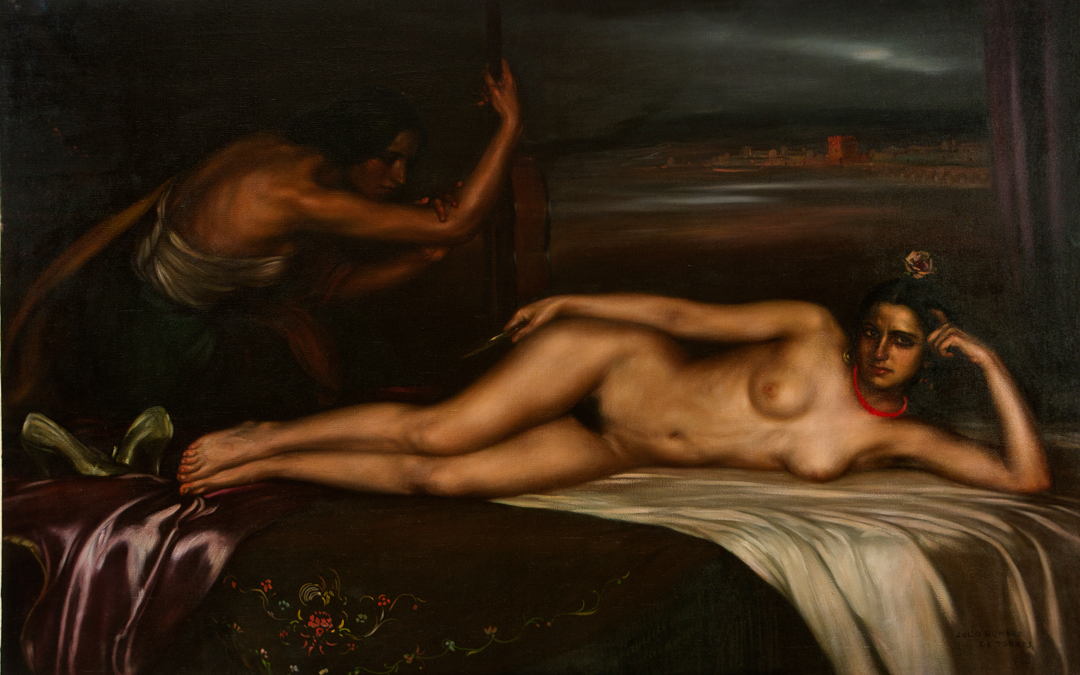
This painting is a posthumous tribute to the famous cantaora “La Trini” made by Julio Romero de Torres. This full-frontal nudity is related to the subjects of flamenco and copla. In this theatrical composition, a courtain is drawn and it appears a feminine...
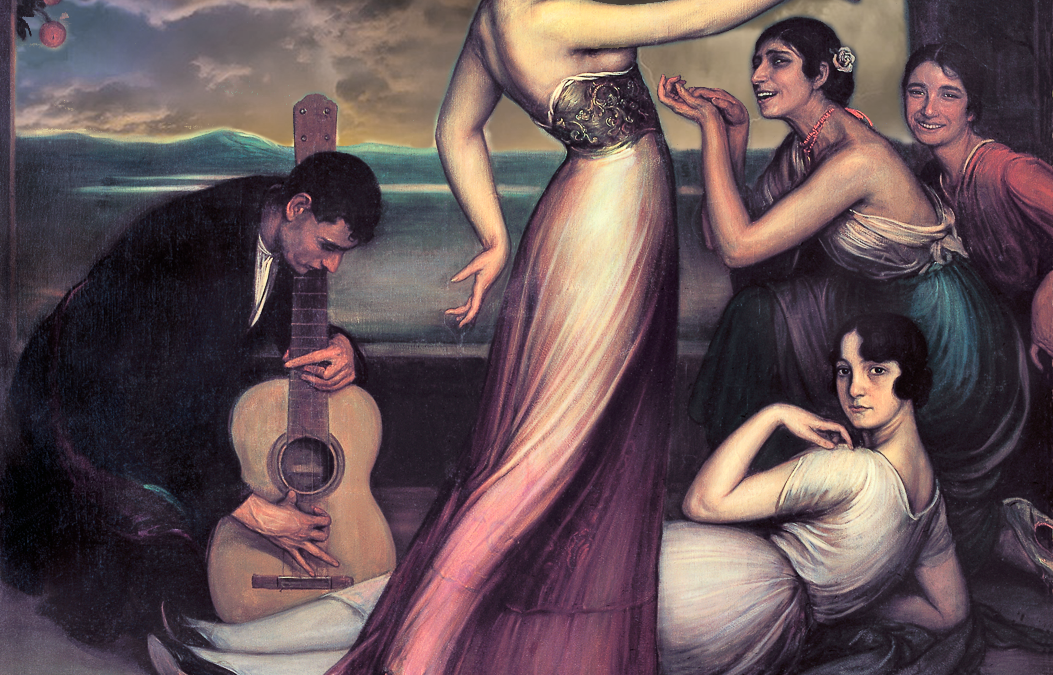
The painter deals with the subject of the “Copla,” a kind of Andalusian folk music, as a natural expression of sadness and happiness. The painter used an expressive and lively formula to create his works. Romero de Torres was a big fan of flamenco music, he...
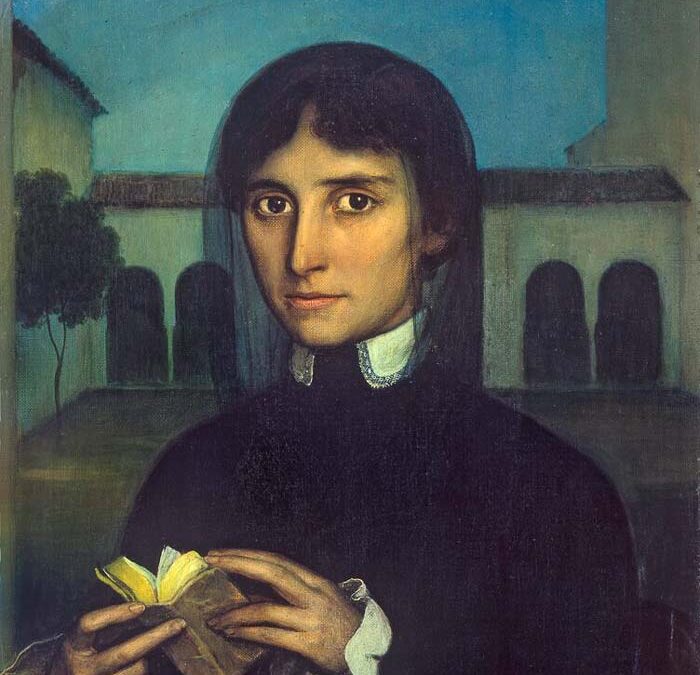
This portrait dated 1914 has clear allusions to the portraits of the Italian Renaissance, in which the protagonist is represented in three quarters in the foreground, dressed in a black veil and dress contrasted by the lace on the collar and white cuffs. In his hands...