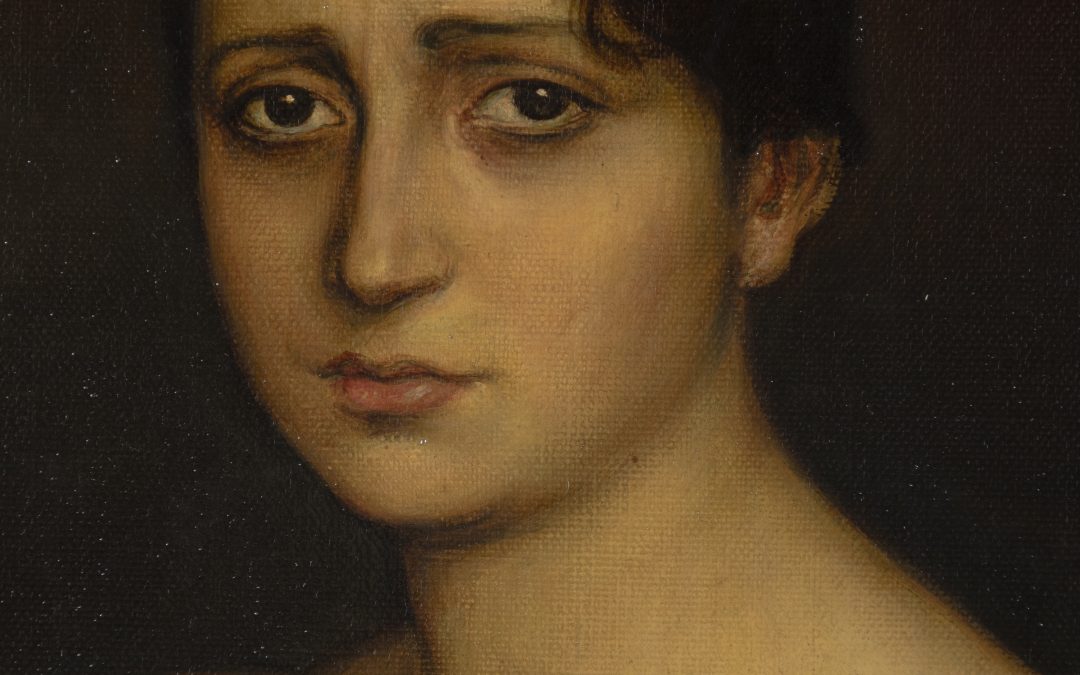
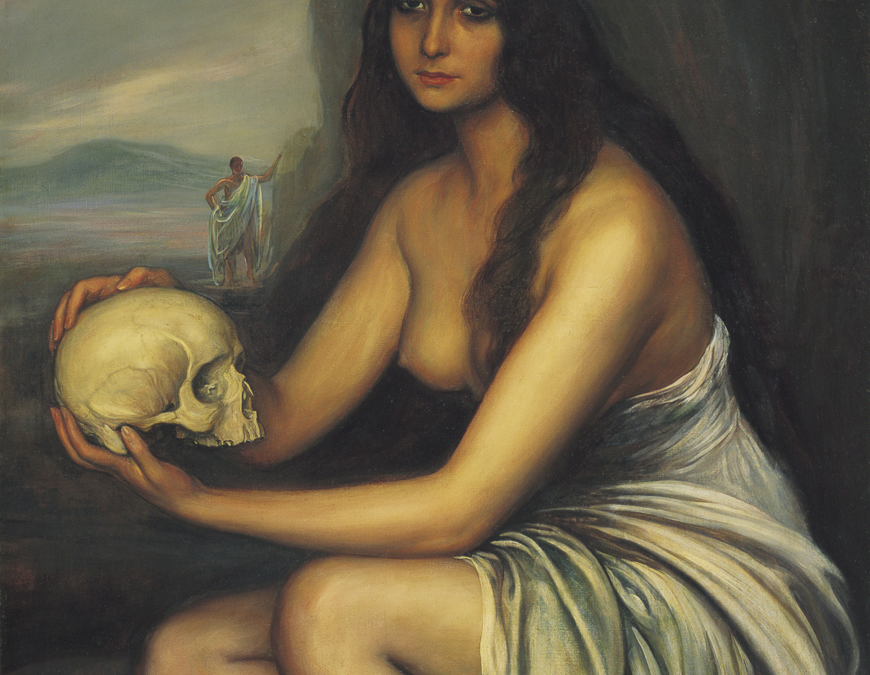
The woman who appears semi-nude in this portrait from 1919 is the Catalan artist Maria Palou, one of the most recognized flamenco dancers of her time. The painter loved this work and hence he retained it until his death. Romero de Torres sold all the works exhibited...
Religion, as part of the beliefs and symbol of popular culture, occupies a prominent place in the production of Julio Romero de Torres. Like many of the painters of fin de siècle symbolism, he was interested in biblical themes, in the representation of hagiography and...
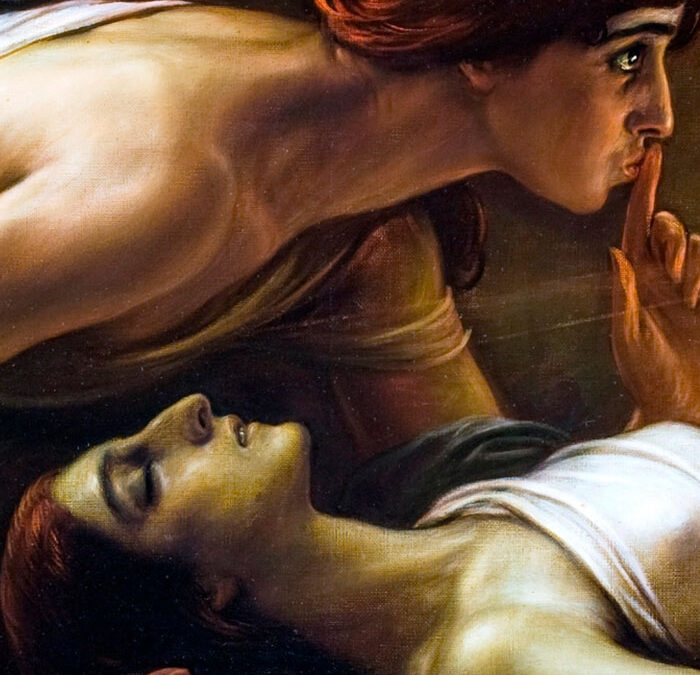
Romero de Torres used religious subjects in his works in a very personal way. The painter had a specially mystic vision and reflects with his works some of the classic biblical subjects. The leading figures of the paintings are usually depicted with sensuality. La...
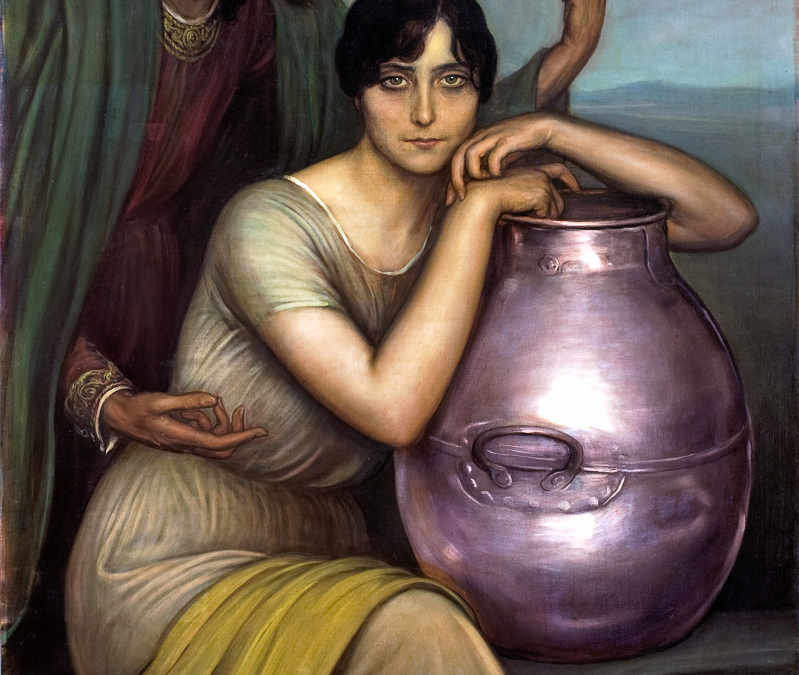
This work shows the Biblical scene of Jesus Christ with the Samaritan woman and starts the series of religious works painted by Julio Romero de Torres. Nevertheless, this work is the only example in which appears the face of Jesus in the shadows. However, the female...
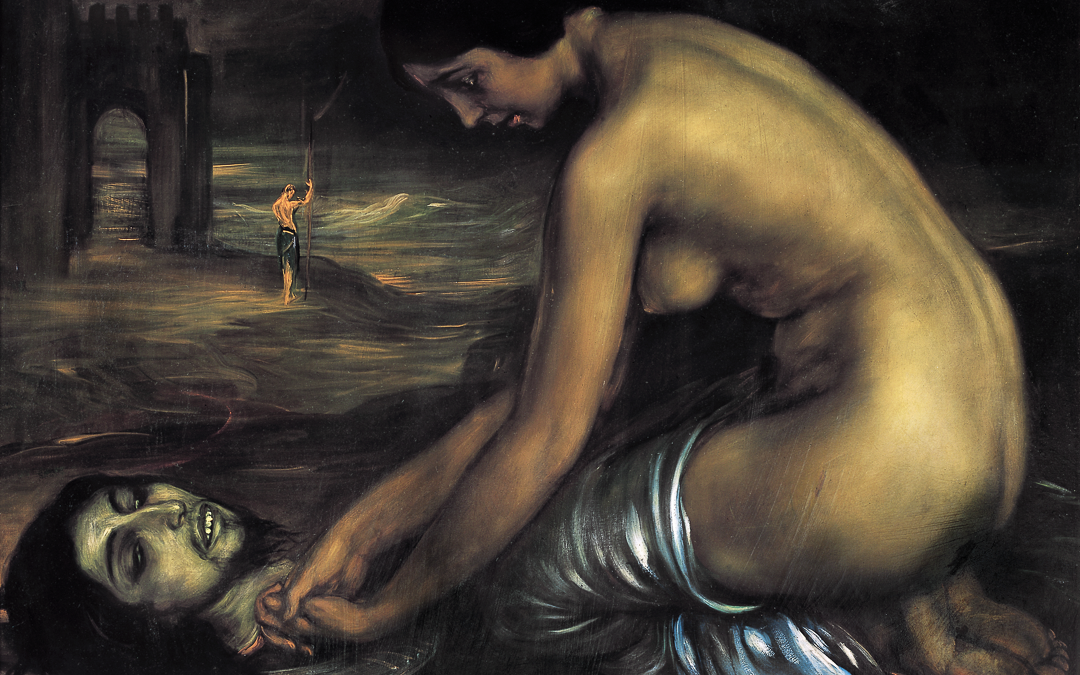
This theme was already represented by the painter in 1917, on a canvas now owned by the National Museum of Visual Arts of Montevideo. The canvas from the Julio Romero de Torres Museum in Córdoba, signed in 1926, conforms to the literary-inspired iconography of Salomé...
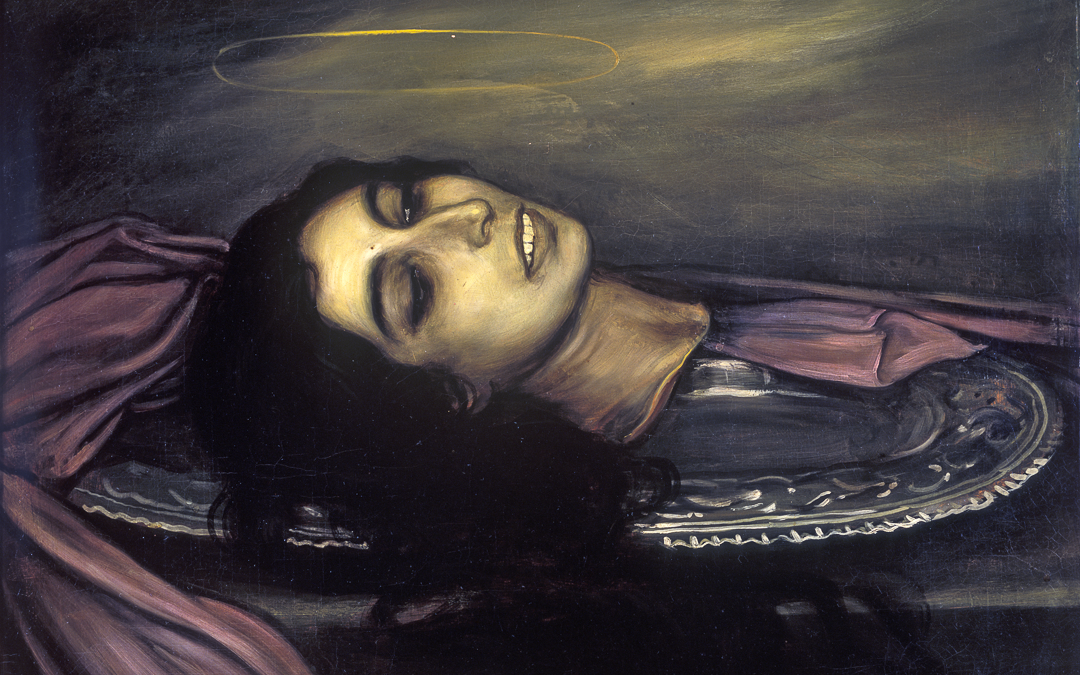
Romero de Torres painted this work of religious content in 1925. It shows the cut head of a woman in an oval tray made of Cordoba silver. The layout of this piece shows the direct influence of the Cordoban Baroque painting school, concretely the school of Juan Valdés...
This work was painted in 1931 by Anselmo Miguel Nieto, a student of Alejo Vera and José Moreno Carbonero at the School of Fine Arts. He was also a portrait painter who depicted the intellectual elite of the time. Anselmo Miguel Nieto traveled with Julio and his...
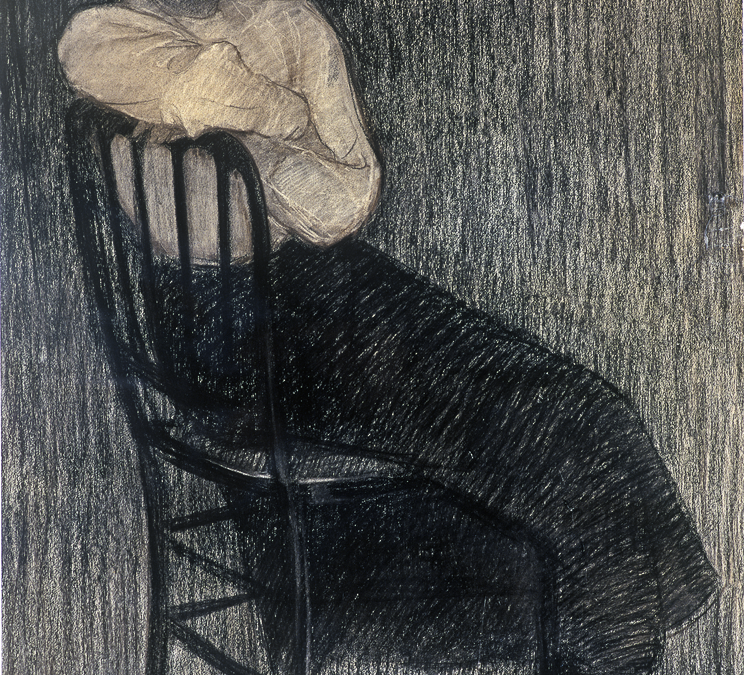
This drawing made in 1902 in pencil and charcoal responds to the interest that Julio Romero de Torres had in the trends of the Catalan, Madrilenians and Parisian modernists who developed drawing, caricature and posters at the end of the 19th century. Echoes authors...
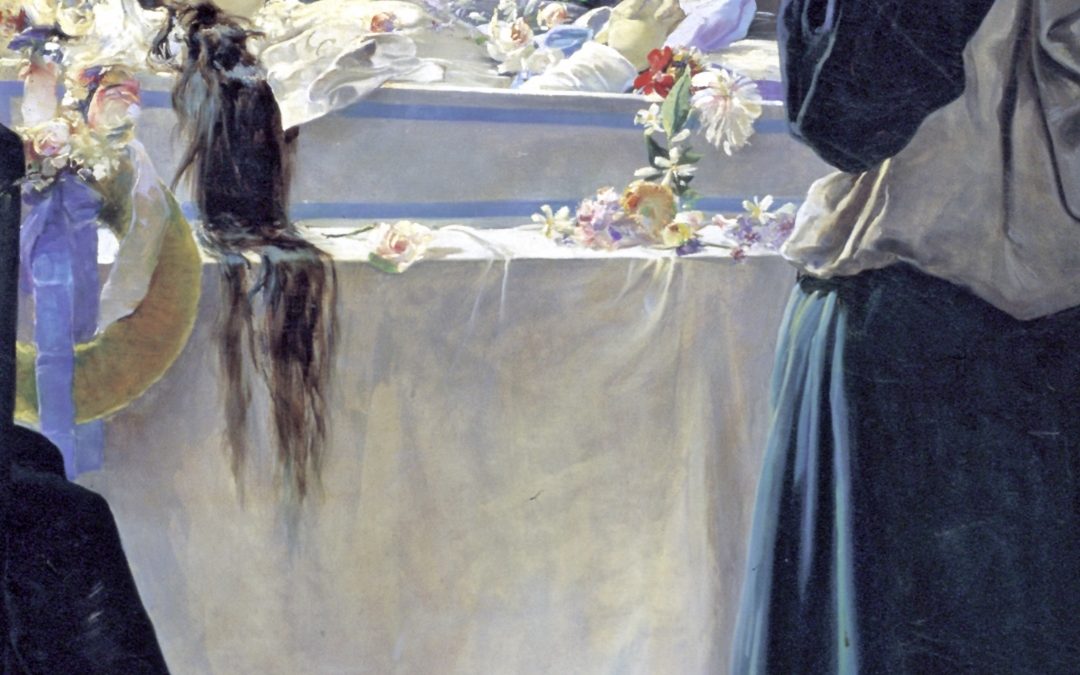
This small canvas is a sketch for Look how pretty she was!. The definitive work was presented at the National Exhibition of 1895 and awarded with an honorable mention. The title replicates one of the verses of a Soleá that narrates the sad popular event of the death...
Julio Romero de Torres became known in the National Exposition of 1895 thanks to this work of impressionist character. The painter received an honorary mention in the exposition. The scene that inspired this painting was a simple and common incident: in the popular...
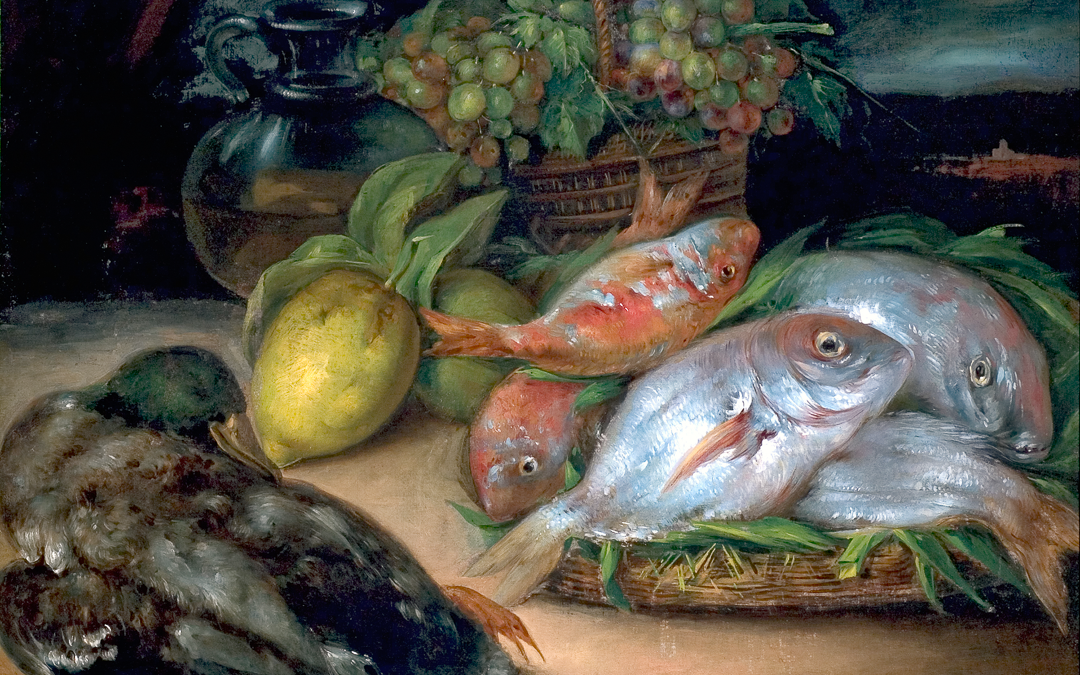
This work is the only existing still life of thematic nature within the painting artwork of Julio Romero de Torres. Although even many of his paintings contain typical elements of still lifes, they are always in the background. Romero de Torres worked with the still...
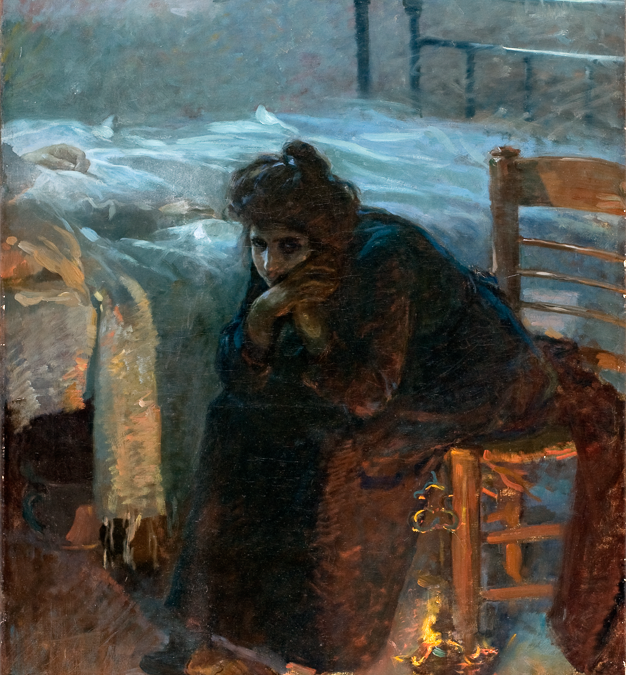
Horas de Angustia, (Hours of Distress) is a painting with social content. The 19th century ended with a great crisis in the country due to the disaster of 1898 and the loss of the last surviving Spanish colonies in America and Asia. The social injustice in Spain...